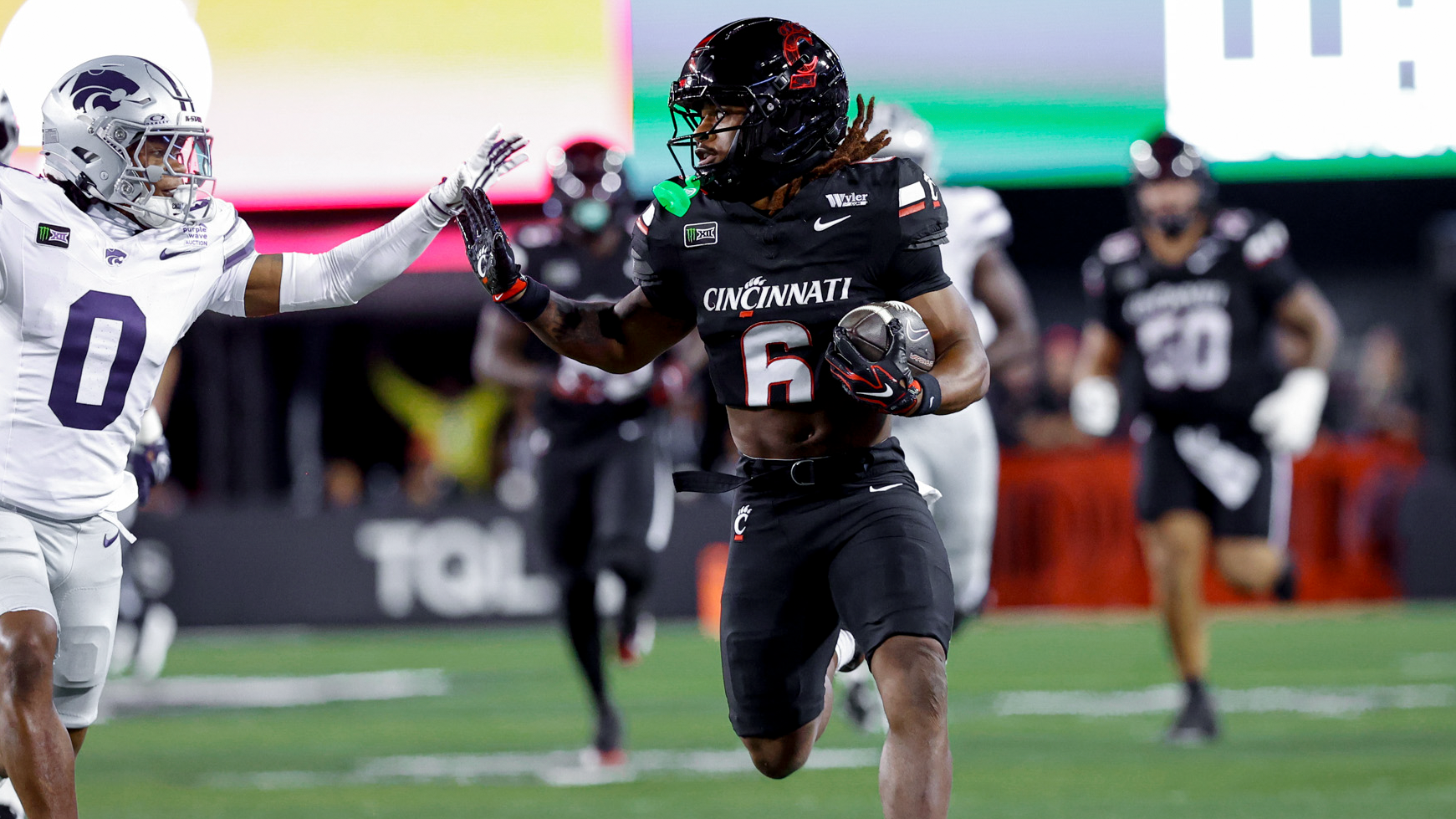
Cincinnati’s ground game meets a mirror with different weaknesses
Both teams can run. The Bearcats’ trip to West Virginia will test who can defend the opponent’s second rushing threat.
Cincinnati returns from its bye to visit West Virginia on October 17. The Bearcats’ October 12 preview lists a 4–1 team whose last game was a 34–7 loss at Arizona on October 3. It reports Cincinnati averaging 230.8 rushing yards per game and West Virginia averaging 295.5. Gi’Bran Payne and Cole Tabb lead the Bearcats’ backfield.
West Virginia lost to Arizona 52–31 on October 10. Arizona’s official recap credits Mountaineer quarterback Michael Hawkins with 98 rushing yards and running back Cam Cook with 141. That pairing gives Cincinnati a concrete defensive problem alongside its own opportunity to reestablish the run.
Defend the runner who does not get the handoff
Our view is that the quarterback component makes this matchup more demanding than a simple comparison of rushing averages. Defenders cannot all flow toward the back without accounting for the player who can keep the ball. A strong first tackle matters, but so does having a second defender in the correct place if the initial read sends the ball elsewhere.
Cincinnati should want West Virginia to earn its ground yards through well-contested carries rather than through assignment confusion. The film-review distinction is important: a runner beating a block is a different problem from nobody being responsible for him. Aggressive pursuit helps only after the defense has preserved its structure. Hawkins’ running production makes that responsibility visible on every relevant snap, even when Cook is the player most likely to draw the ball.
Use the matchup without accepting a race
On offense, Payne and Tabb give Cincinnati a reason to seek a more stable rhythm than it found in Tucson. The temptation will be to see an opponent coming off a high-scoring loss and assume offense will arrive easily. A better approach is to test specific gaps, observe how West Virginia adjusts and keep a passing answer ready when defenders crowd the run.
This game does not have to become a contest to accumulate the largest rushing total. Cincinnati’s useful target is control: enough first downs to keep its defensive assignments from being tested in rapid succession, and enough successful early snaps to avoid throwing only in obvious passing situations. We would watch how the Bearcats respond to their first stopped run and their first quarterback keeper allowed. Those reactions should reveal whether the bye produced a clearer plan for the two very different ground games sharing this field.
Sources & reporting
- Cincinnati Athletics: October 12 West Virginia preview ↗
- Arizona Athletics: October 10 West Virginia recap ↗
This article adds independent analysis to publicly available reporting. We did not conduct the interviews or report the game firsthand. Report a factual error.