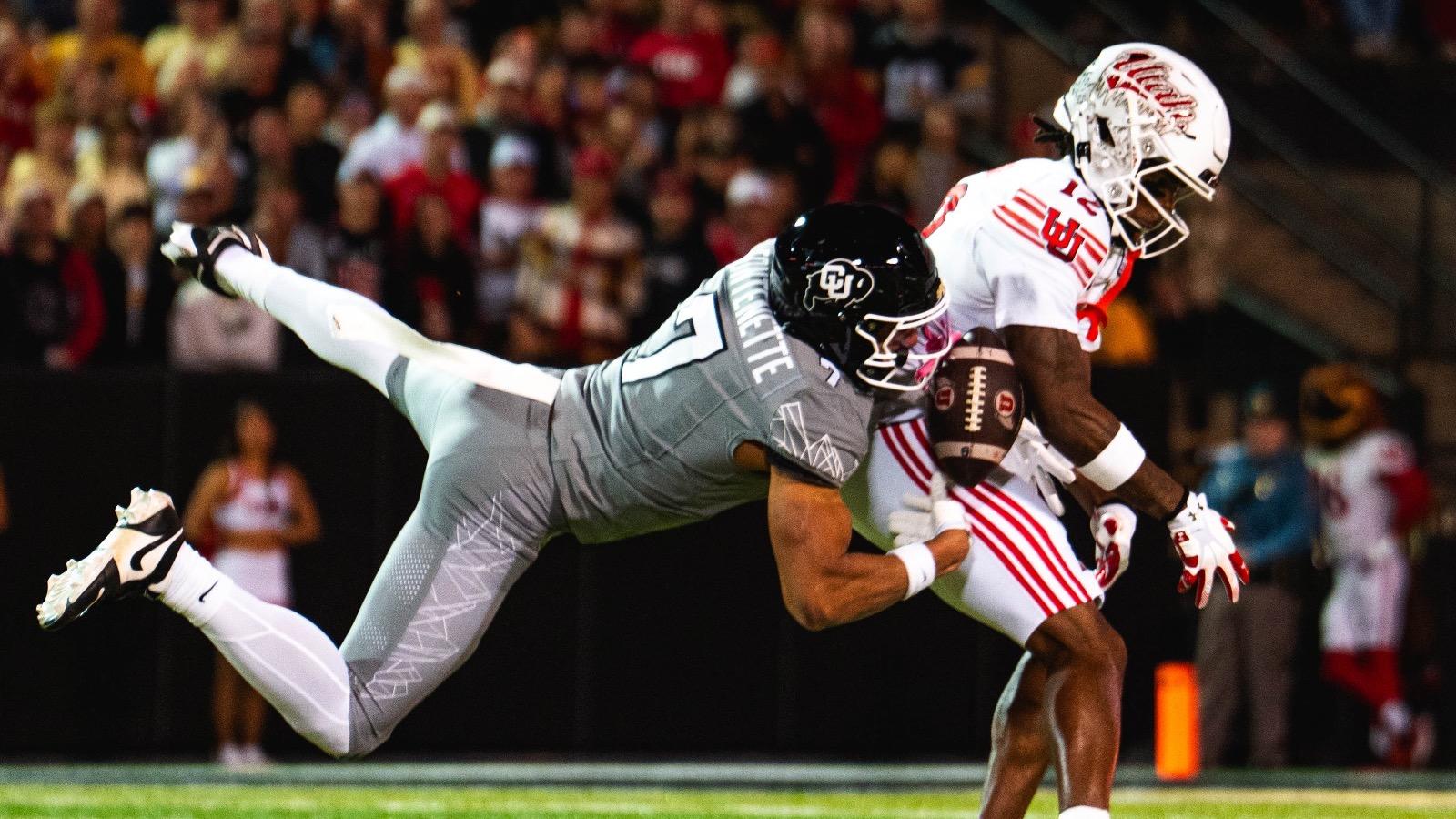
The ball became available because the read held
Gideon Lampron deflected a Utah shovel pass near the goal line, and Dylan Manuel intercepted it. Naeten Mitchell had supplied a two-yard loss on the preceding close-range work. Colorado’s 27–24 loss on October 17 included a defensive sequence that changed far more than a tackle total.
Lampron finished with eleven tackles, 2.5 for loss and a sack. His deflection illustrates a different contribution from simply reaching the backfield: recognizing the ball’s path and remaining able to interrupt it when the offense tried to turn a short throw into its finishing play.
The recovery did change the scoreboard
Colorado trailed 13–0 at halftime before scoring seventeen straight points in the third quarter. Mitchell added an interception during that recovery. The defense helped turn a difficult opening into a game the Buffaloes briefly led.
Utah answered with a 75-yard touchdown drive. The final totals were close—409 yards for Utah and 394 for Colorado—but the next scoring response mattered more than the resemblance between the totals. Colorado had made the Utes work differently without finding a way to prevent their answer once the lead changed hands.
Recognition must survive the next possession
The Buffaloes held Utah below thirty points for the first time this season, allowing 131 rushing yards and 278 passing. At 2–4 overall and 0–3 in the Big 12, they still left without the conference win the comeback had made possible.
Oklahoma State is next on October 24. The useful defensive continuation is maintaining the recognition Lampron showed without assuming that pursuit alone can reproduce a takeaway. A defender who chases the wrong part of the play can remove himself from the passing lane he needs to influence. Saturday supplied evidence of a well-read close-range chance. Colorado now needs that kind of disciplined response to remain available after its own offense has changed the score and the opponent is trying to change it back.
Sources & reporting
This article adds independent analysis to publicly available reporting. We did not conduct the interviews or report the game firsthand. Report a factual error.