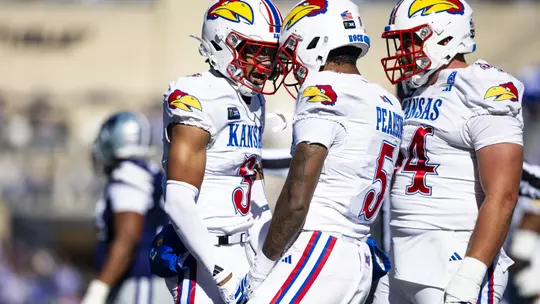
Marshall changed the rushing equation
Isaiah Marshall ran for 117 yards in Kansas' 35-24 loss at Kansas State, giving the Jayhawks a quarterback who can punish man coverage and abandoned rush lanes. He has 372 rushing yards this season, only three fewer than team leader Dylan Edwards, and has paired that work with 1,294 passing yards and nine touchdown passes.
That production makes the offense harder to count. A defender assigned to Marshall cannot immediately join the pursuit of Edwards, and a pass rush that loses lane integrity can turn a covered play into a first down. The risk is allowing one successful afternoon to reduce the offense to repeated quarterback carries against a defense built to deny the run.
Baylor makes the first read important
Baylor allows 86.7 rushing yards and 14.7 points per game, both ninth nationally according to Kansas' game preview. The Bears can crowd the line without panicking, so Marshall must make the correct give, keep or throw decision rather than predetermine that his legs are the answer. A forced keeper into a set edge only creates the long passing down Baylor wants.
Edwards gives Kansas a way to split the burden, while receiver Nik McMillan has 23 catches for 400 yards and four touchdowns. Motioning Edwards or changing McMillan's alignment can reveal how Baylor intends to fit the run. Kansas then needs a companion call that attacks the space the defense sacrificed, not just a second version of the same crowded run.
Homecoming rewards patience, not urgency
Kansas is 2-4 but has won four consecutive homecoming games and is 2-1 at home this season. Those trends can energize the 114th homecoming game without changing the matchup. Baylor's defense is unlikely to surrender simply because the crowd expects an early statement. The Jayhawks must be willing to take efficient gains until the Bears alter their leverage.
Marshall's mobility is most valuable when it remains one branch of the offense. If Kansas can make Baylor defend Edwards, McMillan and the quarterback from similar looks, the Bears cannot send every body toward the first movement. The goal is not another 117 rushing yards from Marshall. It is using the threat of those yards to make the entire offense less predictable.
Sources & reporting
This article adds independent analysis to publicly available reporting. We did not conduct the interviews or report the game firsthand. Report a factual error.