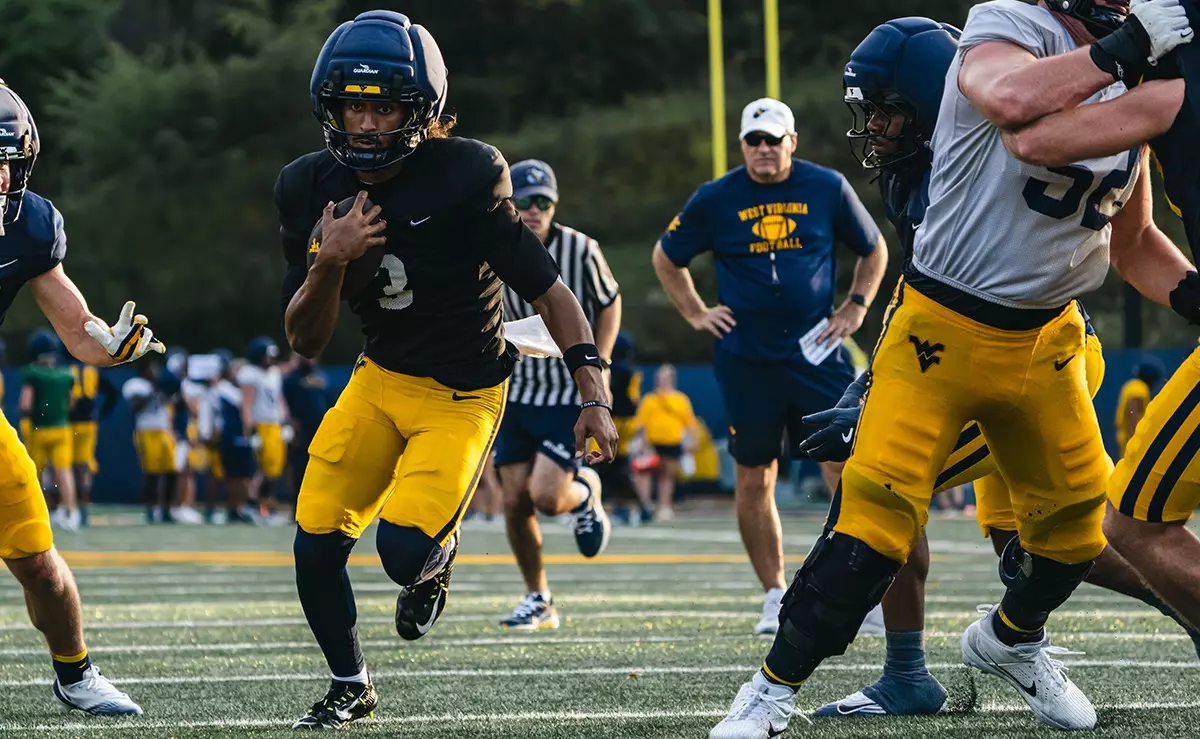
Three names, different kinds of damage
Gi’Bran Payne has rushed for 392 yards at 6.3 yards per carry. Cole Tabb has 330 at 9.7 per attempt. Cincinnati quarterback JC French IV adds 193 rushing yards and a team-leading five rushing touchdowns. West Virginia’s October 14 matchup review describes more than one runner the defense needs to stop.
Tabb’s eleven carries against Kansas State produced 124 yards and three touchdowns in Cincinnati’s 31–26 win. The Bearcats rushed for 271 yards that afternoon. A runner capable of that separation changes how urgently the defense has to close an opening; a quarterback carrying a scoring threat changes which opening it can safely abandon.
The expensive gain begins before the chase
West Virginia has allowed 44 plays of at least twenty yards and fourteen of at least forty. Defensive coordinator Zac Alley said during the week that personnel options were being considered. That does not establish a specific unannounced lineup change, but it does identify a defense looking for a more dependable response.
The next response needs clear responsibilities at the exchange. A defender chasing the back without accounting for the quarterback can expose the edge. A defender waiting indefinitely on the quarterback can leave the handoff too much room. The supporting pursuit has to be positioned to limit the damage if the first contact fails. Cincinnati’s three rushing contributors make those decisions related without making them identical.
The Mountaineers’ own rushing strength cannot make the stop
West Virginia averages 295.5 rushing yards per game. That gives the offense a way to challenge Cincinnati, but those yards cannot be spent on a defensive possession. Each unit still has to solve its own part of the matchup.
The Mountaineers, 3–3 overall and 0–3 in the Big 12, host Cincinnati, 4–1 and 1–1, on October 17 at noon Eastern on TNT, truTV and HBO Max. The useful early sign will be a defense that identifies the actual carrier without letting the other threat pull it out of position. West Virginia does not need three unrelated plans for three runners. It needs one connected set of assignments that respects what makes each runner dangerous.
Sources & reporting
- West Virginia Athletics: Cincinnati rushing matchup analysis, October 14 ↗
- West Virginia Athletics: Cincinnati kickoff and broadcast announcement ↗
This article adds independent analysis to publicly available reporting. We did not conduct the interviews or report the game firsthand. Report a factual error.