The adjustment began before the snap
Illinois’ defensive communication change under Roger Cooper removed an intermediary from the signaling chain, allowing the call to go directly to the player. Reporting by The Daily Illini also described defensive backs meeting together so corners could better understand the reasons behind calls relayed by safeties.
That is a specific operational change, not a promise that the defense will now prevent every score. The purpose is to make more players arrive at the snap with the same understanding, reducing the avoidable part of an assignment before the opponent has tested it.
The Michigan State finish supplied a warning
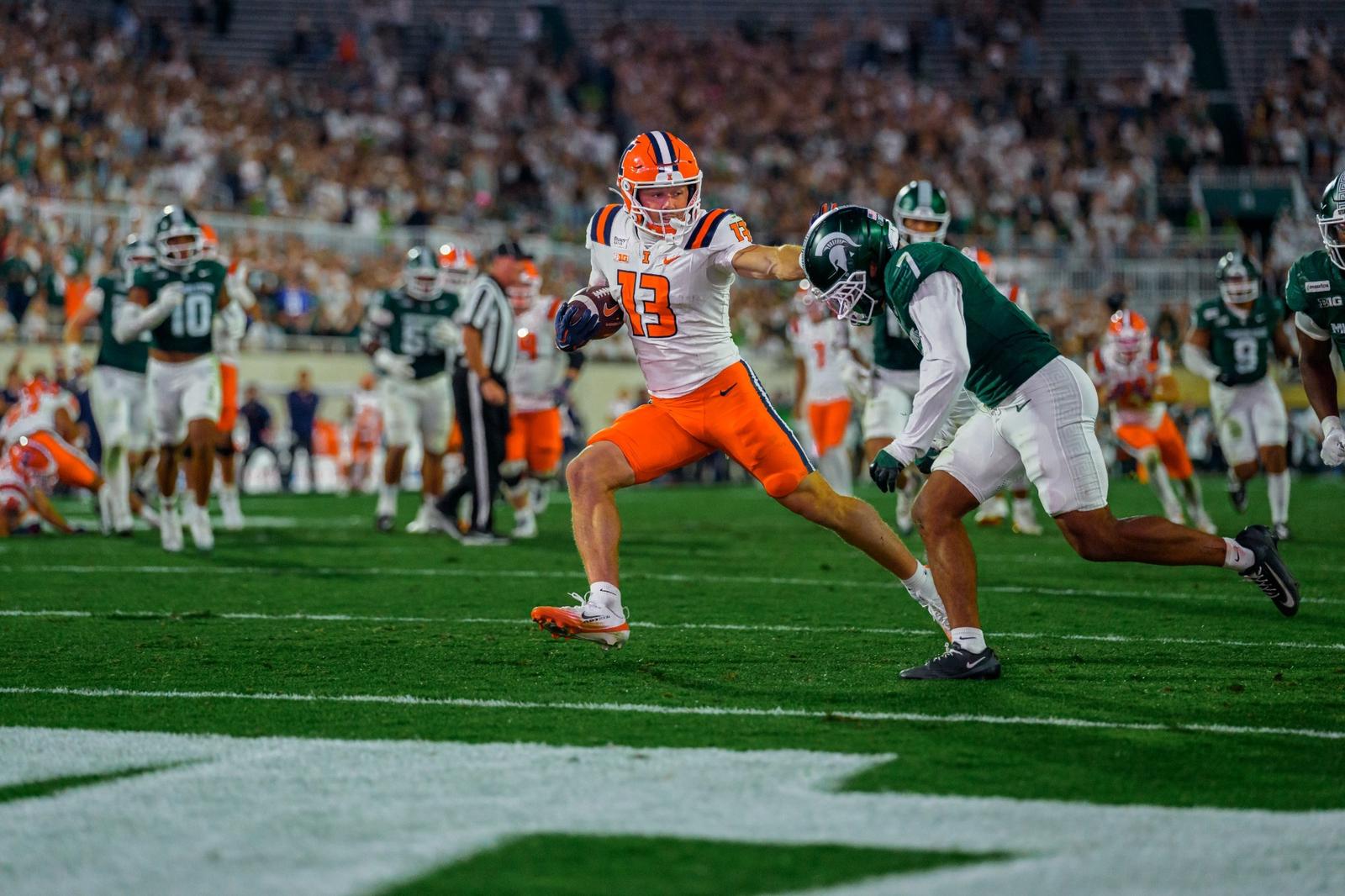
Illinois beat Michigan State 38–37 in overtime on October 10, ending the game with Xavier Scott’s breakup of the attempted winning two-point conversion. The Illini had led 23–7 and later 31–17. The communication work remained relevant even after the defense had to survive another lost cushion.
James Kreutz made a career-high fifteen tackles and a sack. A forced fumble by Juice Clarke, recovered by Daniel Brown, ended Michigan State’s opening second-half possession. Those individual contributions mattered, but the final margin showed why no one adjustment should be pronounced a complete cure after a successful play or a single win.
The bye provides time, not proof
Illinois rested October 17 and is 3–3 overall and 1–2 in the Big Ten. Oregon visits October 24 at 2 p.m. Central on Big Ten Network, with Cooper continuing the defensive play-calling work during preparation.
A shorter relay is valuable only if the message is accurate, understood and executed together. A player receiving the call sooner still has to recognize the formation and respond when the offense changes it. The extra preparation gives Illinois time to connect those stages. The next evidence will be whether the defense retains that clarity through ordinary possessions and late adjustments, rather than needing another isolated pass breakup to protect the last point of a lead that once looked much safer.
Sources & reporting
- The Daily Illini: Cooper’s defensive communication changes, October 7 ↗
- WAND: Illinois uses bye week for Oregon preparation ↗
- Illinois Athletics: Michigan State recap, October 10 ↗
- Illinois Athletics: Oregon kickoff announcement, October 17 ↗
This article adds independent analysis to publicly available reporting. We did not conduct the interviews or report the game firsthand. Report a factual error.