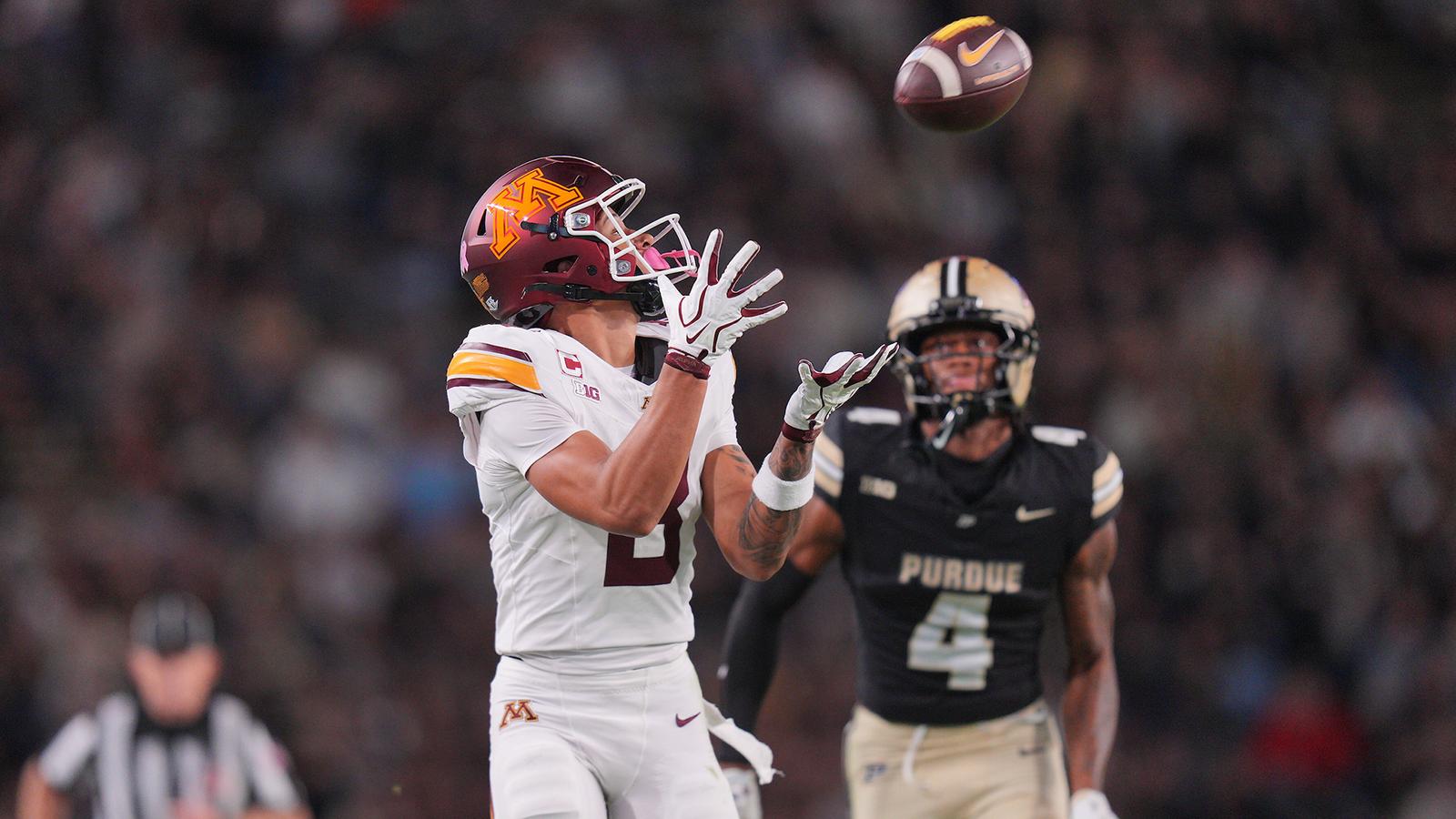
Minnesota’s bye begins with a 278-yard rushing imbalance
The Purdue loss exposed trouble on both sides of the ground game before the Gophers return to face Iowa.
Minnesota lost 41–13 at Purdue on October 10. Its official game statistics list 27 rushing yards for the Gophers and 305 for the Boilermakers, a difference of 278. Drake Lindsey threw for 248 yards and a touchdown, but Minnesota gained only 275 total yards to Purdue’s 464.
The Gophers enter their open week at 4–2 overall and 2–1 in Big Ten play. They return October 24 to host Iowa, a matchup confirmed in the Hawkeyes’ October 12 announcement. That announcement lists Iowa at 5–1 following a 41–24 road win at Washington. Minnesota’s next opponent therefore arrives with a successful recent result of its own.
Two ground-game problems need separate answers
The rushing disparity should not be compressed into one explanation. Minnesota’s offense needs to determine why its own runs produced so little usable progress. Its defense needs to determine how Purdue found so much. The units may influence each other through possession length, but they still have different assignments and different film to correct.
On offense, the important question is whether runs failed because the blocking matchup was unfavorable, a defender arrived unaccounted for or a promising lane closed before the back could use it. On defense, the review should distinguish missed tackles from open gaps created by assignment errors. Broad calls for greater physicality do not identify which player needs a different decision on the next snap. The bye provides time for a more specific diagnosis.
Make Lindsey’s throws less compulsory
Lindsey’s passing yards show that Minnesota retained a way to move the ball. A one-dimensional offense nevertheless makes those throws harder to sustain, because the defense can anticipate the next request. The run does not need to generate a huge total to help. It needs enough successful snaps to preserve believable choices and create workable second and third downs.
Against Iowa, we would watch whether Minnesota’s first offensive series produces those choices and whether its defense can contain a normal rushing play without needing extra pursuit to rescue it. A few spectacular tackles would be less convincing than a string of correctly defended ordinary carries. The Purdue score was damaging, but the rushing totals give the Gophers a concrete place to begin. A useful return from the bye would reduce that imbalance through two coordinated improvements, making both the quarterback’s job and the defense’s workload more manageable.
Sources & reporting
- Minnesota Athletics: Purdue recap and statistics ↗
- Iowa Athletics: October 12 update confirming Minnesota matchup ↗
This article adds independent analysis to publicly available reporting. We did not conduct the interviews or report the game firsthand. Report a factual error.