Nebraska won the clock, then lost the two snaps that mattered
The Huskers’ control against Indiana lasted most of the afternoon. Oregon week asks how to protect it from a sudden passing strike.
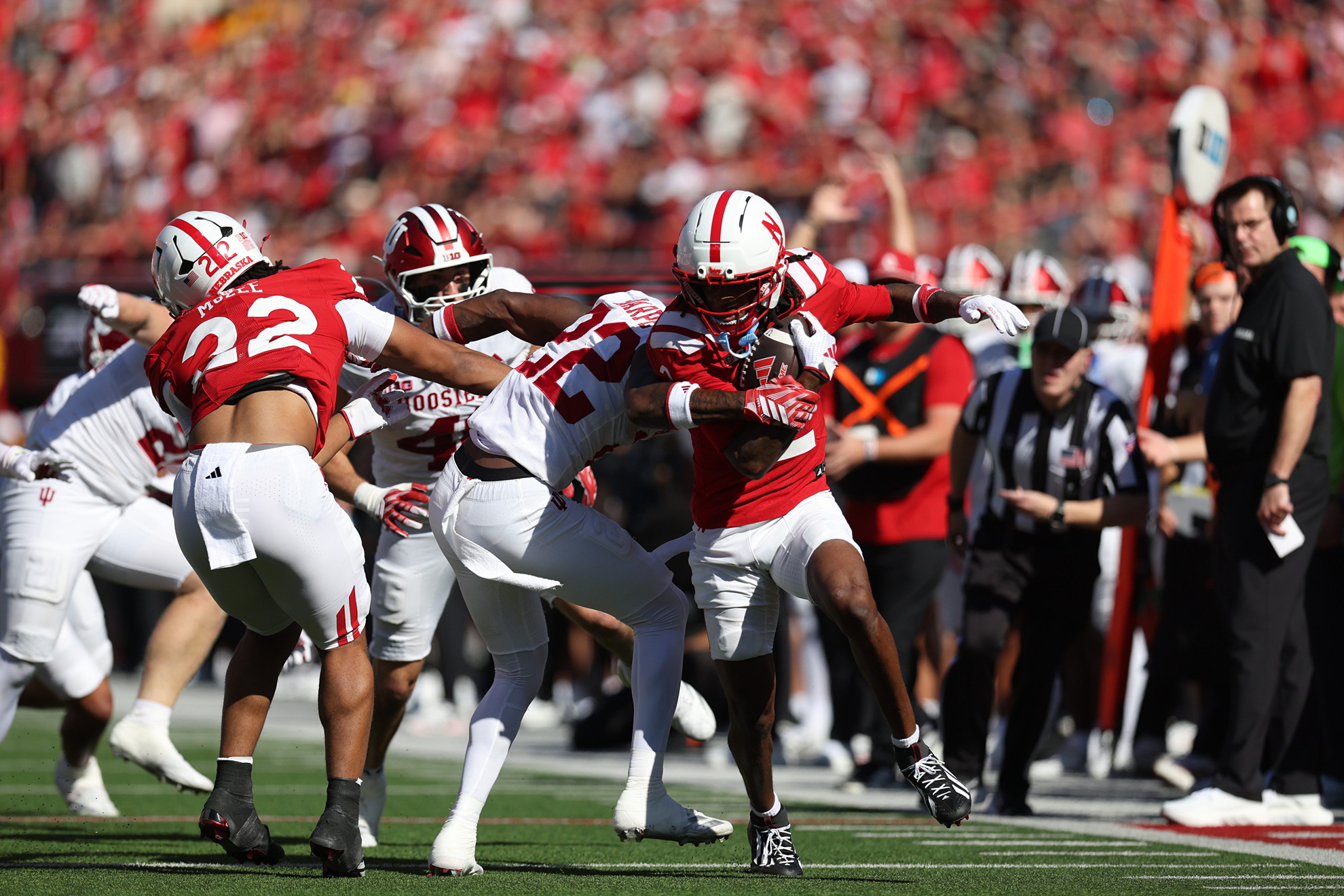
Nebraska lost 20–17 to Indiana on October 10 after leading 17–6 in the fourth quarter. The Huskers held the ball for 39:33, ran 83 offensive plays and limited Indiana to 65 rushing yards. Nick Marsh nevertheless scored on receptions of 75 and 44 yards, with the latter coming on fourth-and-one.
Anthony Colandrea passed for 263 yards and ran for 47, including a 39-yard touchdown. Jacory Barney Jr. caught nine passes for 108 yards. Nebraska is 5–1 overall and 2–1 in Big Ten play before its October 17 trip to Oregon. The official schedule lists an 8 p.m. Pacific kickoff in Eugene.
Long control and short vulnerability can coexist
Our reading is that Nebraska should preserve the work that restricted Indiana’s rushing game while separating it from the coverage failures that changed the score. Winning time of possession makes an opponent wait to attack; it does not limit the damage of the attack once the ball returns. Two long touchdowns can erase a large amount of successful ordinary defense.
That distinction matters when reviewing fourth-and-short. The offense still has access to a pass beyond the sticks, even if the distance makes a run seem more immediate. Defenders need to satisfy their run responsibilities without losing sight of a receiver whose route can turn a first down into something much larger. We cannot identify Nebraska’s exact assignment failure from the score alone. We can identify the tactical problem its next plan must account for: a short-yardage formation does not make the rest of the field disappear.
Protect the next possession as well as the lead
The offense also has a role after an opponent lands a sudden strike. Another set of downs can restore the pace and give the defense time to organize. Colandrea and Barney supplied meaningful passing production against Indiana; the next challenge is finding that production when the opponent knows why Nebraska urgently needs it.
At Oregon, the Huskers should be assessed through the relationship between their sustained possessions and their explosive plays allowed. A long drive that scores is valuable. A long drive followed by an immediate touchdown surrendered leaves much of its control behind. The strongest response would keep Nebraska’s rushing resistance intact, improve its awareness of passing threats in compressed situations and provide an offensive answer after a momentum swing. The Indiana defeat does not erase the quality of the first five wins. It does show why a team controlling the afternoon still has to defend its most dangerous seconds.
Sources & reporting
This article adds independent analysis to publicly available reporting. We did not conduct the interviews or report the game firsthand. Report a factual error.