The numbers behind the road win
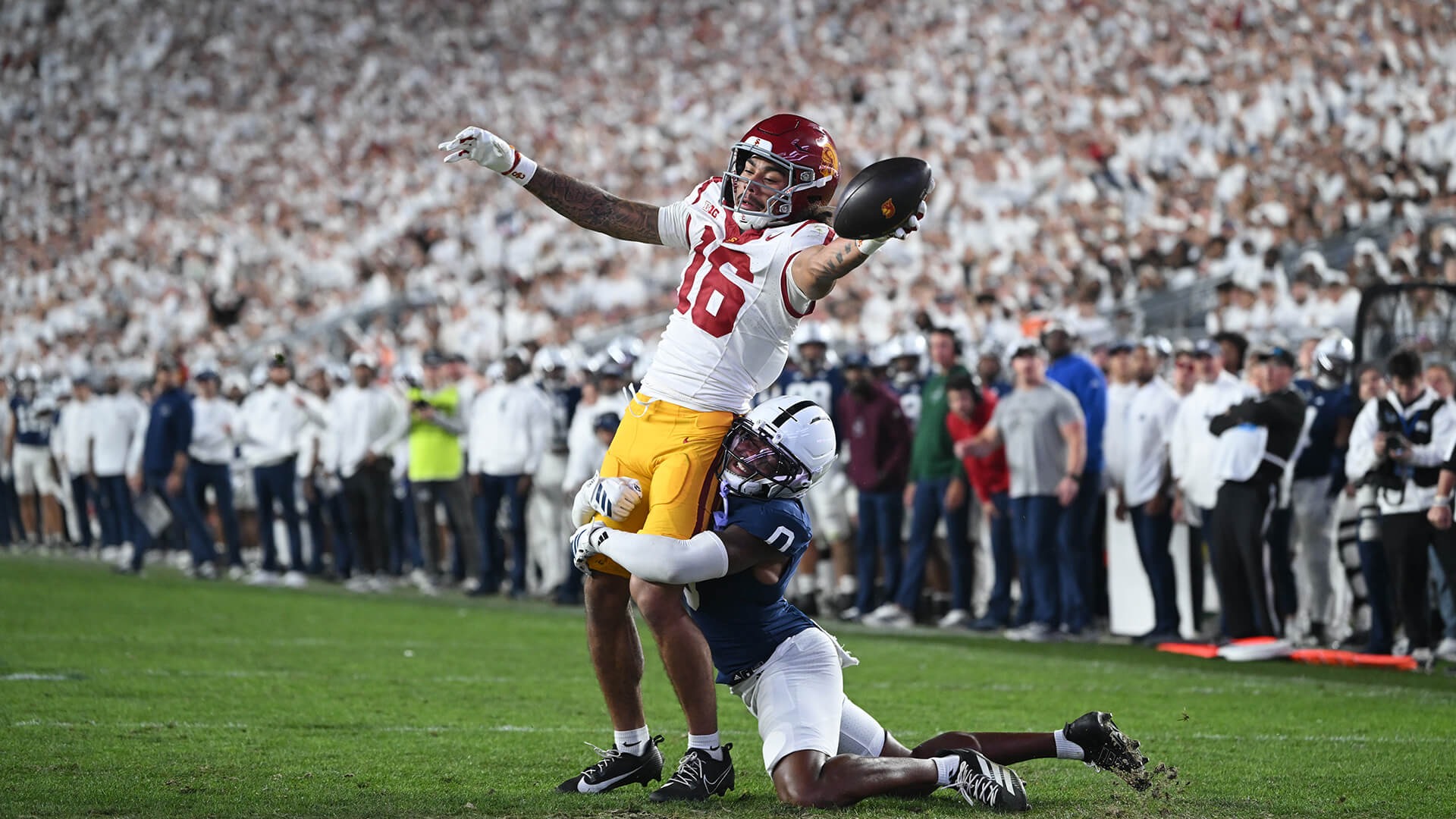
USC beat Penn State 31–23 on October 10. The Trojans’ official statistics list 301 passing yards for Jayden Maiava and 102 rushing yards for King Miller. The game center records five conversions on eleven third-down attempts for USC and two on twelve for Penn State.
That third-down gap is useful evidence because it describes the ability to extend or end possessions. The final margin was one score, but USC repeatedly gave itself more chances to continue the work of a drive than Penn State created on the same down.
Possession control is more than a clock total
An offense does not need to dominate time of possession to influence a game’s shape. Converting a difficult down can keep the opponent’s offense off the field, improve territory and change the next decision. A defense getting off the field gives its own offense the chance to operate before urgency takes over.
Our assessment is that USC’s win should be discussed through that relationship as well as Maiava’s passing total. The quarterback’s production matters more when the offense keeps reaching usable situations, and the offense’s work matters more when the defense limits the number of complete opposing drives. The useful question is whether those parts continue to reinforce one another.
Ask how the advantage was created
Fans should avoid treating a conversion percentage as a permanent team trait. The next opponent will produce different down-and-distance situations and different defensive choices. We would watch whether USC is creating third downs it can reasonably convert or repeatedly asking a talented player to escape an unnecessarily difficult one.
On defense, the corresponding test is whether early-down work continues to make the opponent’s third down predictable. A stopped conversion becomes easier to achieve when the earlier snaps have reduced the offense’s options. The Penn State result gives USC evidence of a road assignment completed in both areas. Maintaining that advantage requires attention to the snaps that create the headline statistic, not simply confidence that the statistic will look the same when the next game ends.
Sources & reporting
This article adds independent analysis to publicly available reporting. We did not conduct the interviews or report the game firsthand. Report a factual error.