The lead stopped growing
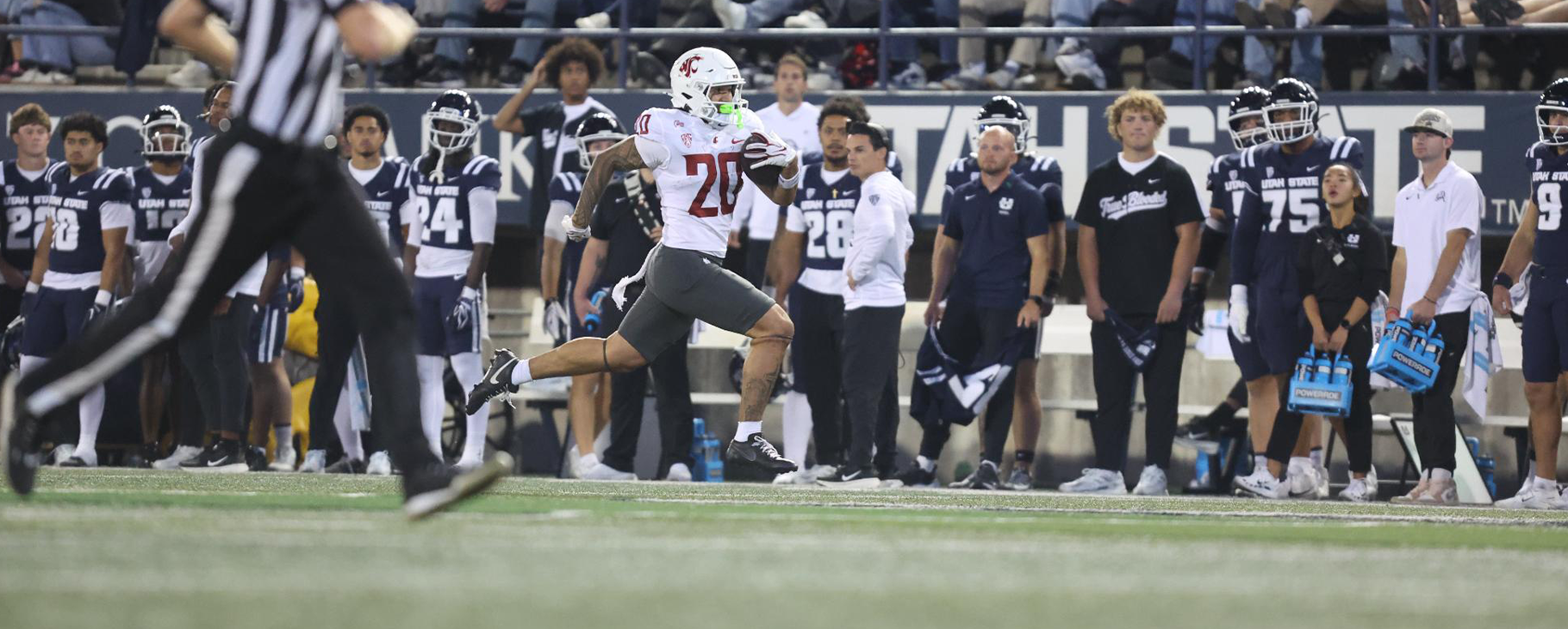
Washington State lost 17–16 at Utah State on Friday, October 9, dropping to 1–5 overall and 0–2 in Pac-12 play. All sixteen Cougar points came in the first half, when they built a 16–3 lead. Leo Pulalasi carried eight times for 60 yards, including a 54-yard touchdown run.
Caden Pinnick completed 23 of 36 passes for 156 yards. Jack Stevens made all three of his field-goal attempts, with a long of 50 yards. Washington State next visits Oregon State at Reser Stadium on October 17, with kickoff scheduled for 3 p.m. Pacific. The immediate challenge is keeping an offense productive after its initial scoring chances have passed.
One carry can hide seven others
Subtracting Pulalasi’s 54-yard touchdown from his 60-yard total leaves six yards across his other seven carries. That is our calculation from the official line, not a new team statistic. It illustrates how a memorable explosive run can coexist with limited ordinary rushing progress. Both parts of the performance matter, and neither should erase the other.
The touchdown shows Washington State can make a defense pay when an opening appears. The remaining carries make the next question more practical: can the offense gain useful ground when there is no clean breakaway? Even modest success can keep the subsequent down from becoming a predictable passing situation. That does not require Pulalasi to reproduce a 54-yard run every week. It requires more snaps that leave the offense with genuine choices.
Do not leave the kicker every finish
Stevens’s three successful field goals supplied a reliable return from those opportunities. His accuracy should be recognized, not used as a reason to accept every possession ending short of a touchdown. Washington State’s sixteen first-half points were enough to establish a lead, but its scoreless second half left no answer once Utah State began converting takeaways into touchdowns.
The Oregon State game offers a chance to judge progress by drive shape rather than a single highlight. Watch whether Washington State can pair its passing completions with useful early-down runs, and whether drives that reach scoring range preserve a credible touchdown option. The Cougars do not need to choose between explosiveness and steadiness. They need the latter to make the former an advantage they can hold, rather than a brief lead the offense cannot extend.
Sources & reporting
This article adds independent analysis to publicly available reporting. We did not conduct the interviews or report the game firsthand. Report a factual error.