Stanford’s reset begins with surviving the opening possession
The Notre Dame defeat became difficult immediately. Elon week offers a chance to restore an offense with usable next steps.
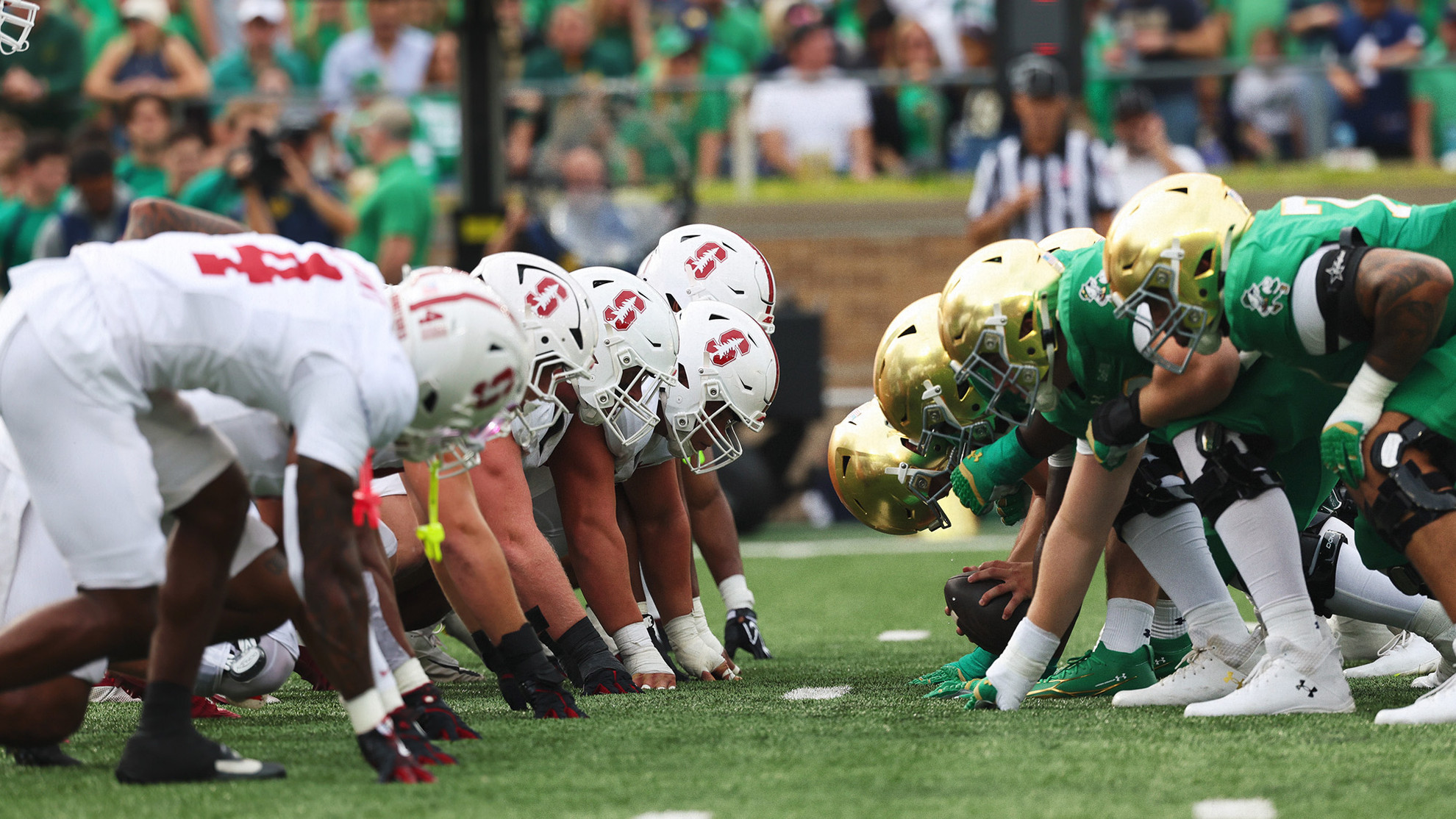
Stanford lost 58–7 at Notre Dame on October 10 and is 2–4. An opening-play strip-sack gave the Irish an immediate scoring opportunity. Stanford’s only touchdown came on a three-yard pass from Davis Warren to Benji Blackburn after a 52-yard completion to Caden High.
High finished with three catches for 64 yards, and Micah Ford rushed 13 times for 48 yards. The Cardinal lost the turnover battle after avoiding a losing margin in its first five games. Stanford hosts Elon on October 17 before facing NC State on October 23.
Make the first decision easier to execute
An opening script should provide more than a list of preferred plays. It should contain a clear response to the defensive presentation that appears across from it. A quarterback needs to know which pressure requires a changed protection, which route arrives first and where the ball can safely go if the intended opportunity vanishes.
The strip-sack does not tell us which part of Stanford’s first play failed. It does establish the cost of failing before the offense has had time to develop its rhythm. A cleaner opening possession against Elon would not require an immediate touchdown. A protected completion, a run that creates a manageable next down and an orderly decision to punt if necessary could provide a firmer foundation than another series ending in an urgent defensive assignment.
A long completion needs supporting plays
High’s 52-yard gain helped create the touchdown Stanford did score. It also illustrates how much an offense can depend on one successful moment when the surrounding series are unproductive. The useful next step is to make a smaller completion or a routine carry contribute reliably, so the offense has a path that remains available when the big opportunity is defended.
Ford’s rushing work can help preserve that path if the blocking and passing threats force defenders to honor more than one responsibility. The Cardinal should not treat Elon as an automatic recovery simply because the opponent changes. The same coordination still has to reach the field. Saturday’s performance is best judged by whether Stanford can begin possessions deliberately, recover from a stopped play and create scoring opportunities without an exceptional gain doing nearly all the work. With another game arriving the following Friday, making those ordinary relationships dependable would be a particularly useful form of progress.
Sources & reporting
This article adds independent analysis to publicly available reporting. We did not conduct the interviews or report the game firsthand. Report a factual error.