Two different receiving lines
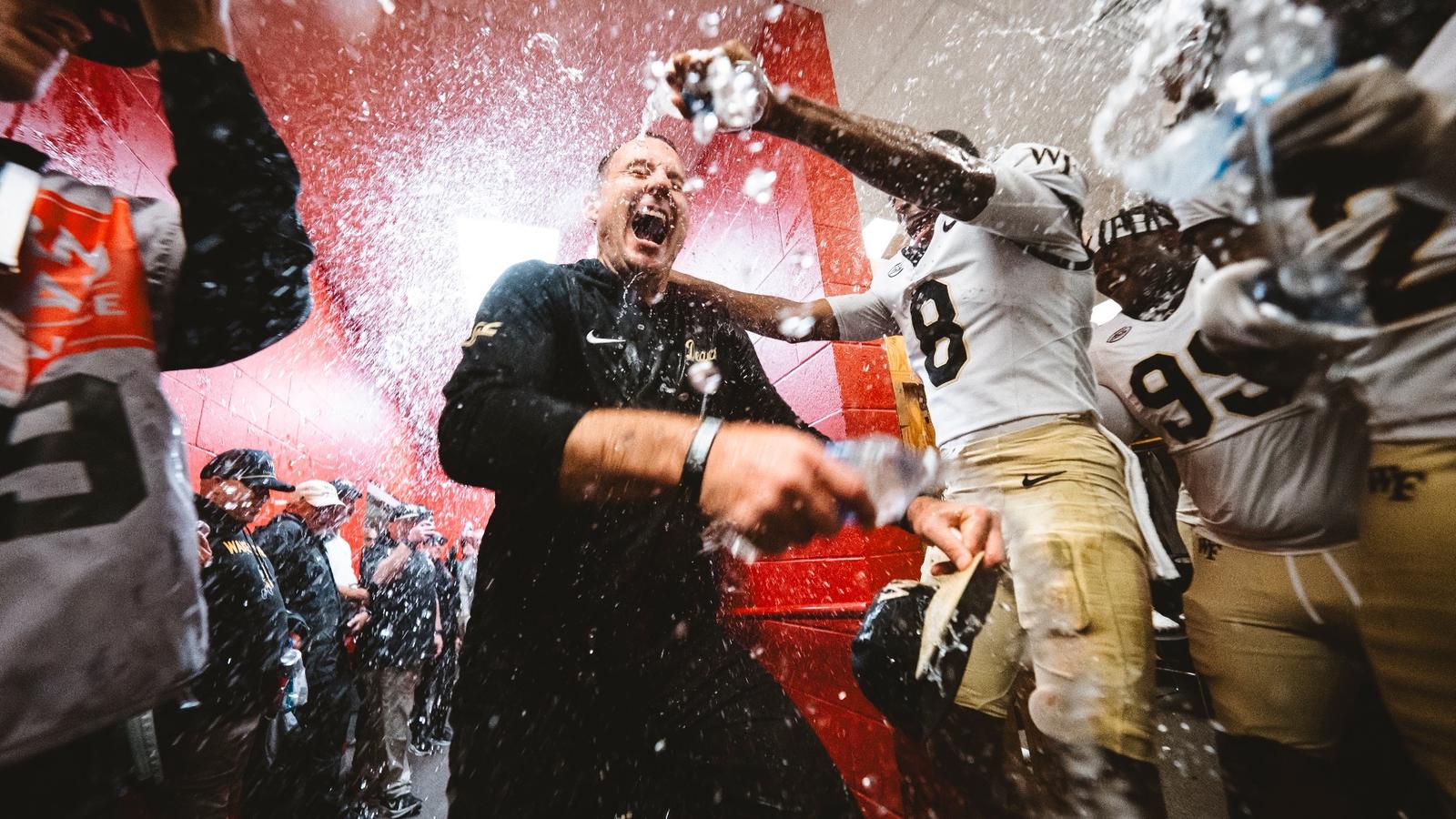
Wake Forest beat NC State 38–14 on October 10, moving to 5–1 overall and 3–1 in the ACC. The Demon Deacons trailed 14–10 at halftime, then outscored the Wolfpack 28–0 and outgained them 265–63 after the break. Gio Lopez finished 26 of 33 for 303 yards and three passing touchdowns, adding a rushing touchdown.
Jack Foley caught eight passes for 156 yards; Carlos Hernandez caught twelve for 117. Lopez completed 15 of 16 passes for 218 yards in the second half. Wake Forest’s October 12 release announced ACC weekly honors for Lopez, Foley, and Vincent Firenze. The Deacons visit California October 17 at 10:30 p.m. Eastern.
Distance and continuity
Foley’s line works out to 19.5 yards per reception, while Hernandez’s is 9.75. Those are our calculations from the official totals. The contrast is useful because it shows two kinds of passing production occupying the same offense. One line delivered substantial distance per catch; the other offered a large number of connections. Neither should be treated as the less important job merely because its yardage-per-catch figure is smaller.
A defense facing both kinds of threat has choices to reconcile. Giving extra attention to the receiver who can change field position may open space for a reliable connection elsewhere. Closing the shorter window may expose a more expensive completion. That is an analytical possibility, not a claim that every Wake Forest catch came against the same coverage. The totals establish complementary output without telling us every route or defensive assignment.
A second-half standard, not a guarantee
Lopez’s near-perfect second-half completion line adds a precision element to the comeback. It suggests the passing game kept possessions alive while creating substantial gains. California will have the opportunity to study that performance, so Wake Forest cannot assume the same windows will appear. The important next step is retaining useful answers when an opponent changes which receiver it prioritizes.
The defense’s second-half limitation of NC State also deserves equal billing. A passing surge matters more when the opponent is not matching it possession for possession. Wake Forest’s road test should therefore be read as a combined exercise: preserve the receiver partnership, connect early rather than waiting for halftime, and keep the other offense from setting the pace. The win supplied a specific blueprint. Its strength was the way different jobs fit together.
Sources & reporting
This article adds independent analysis to publicly available reporting. We did not conduct the interviews or report the game firsthand. Report a factual error.