The scoreboard accelerated early
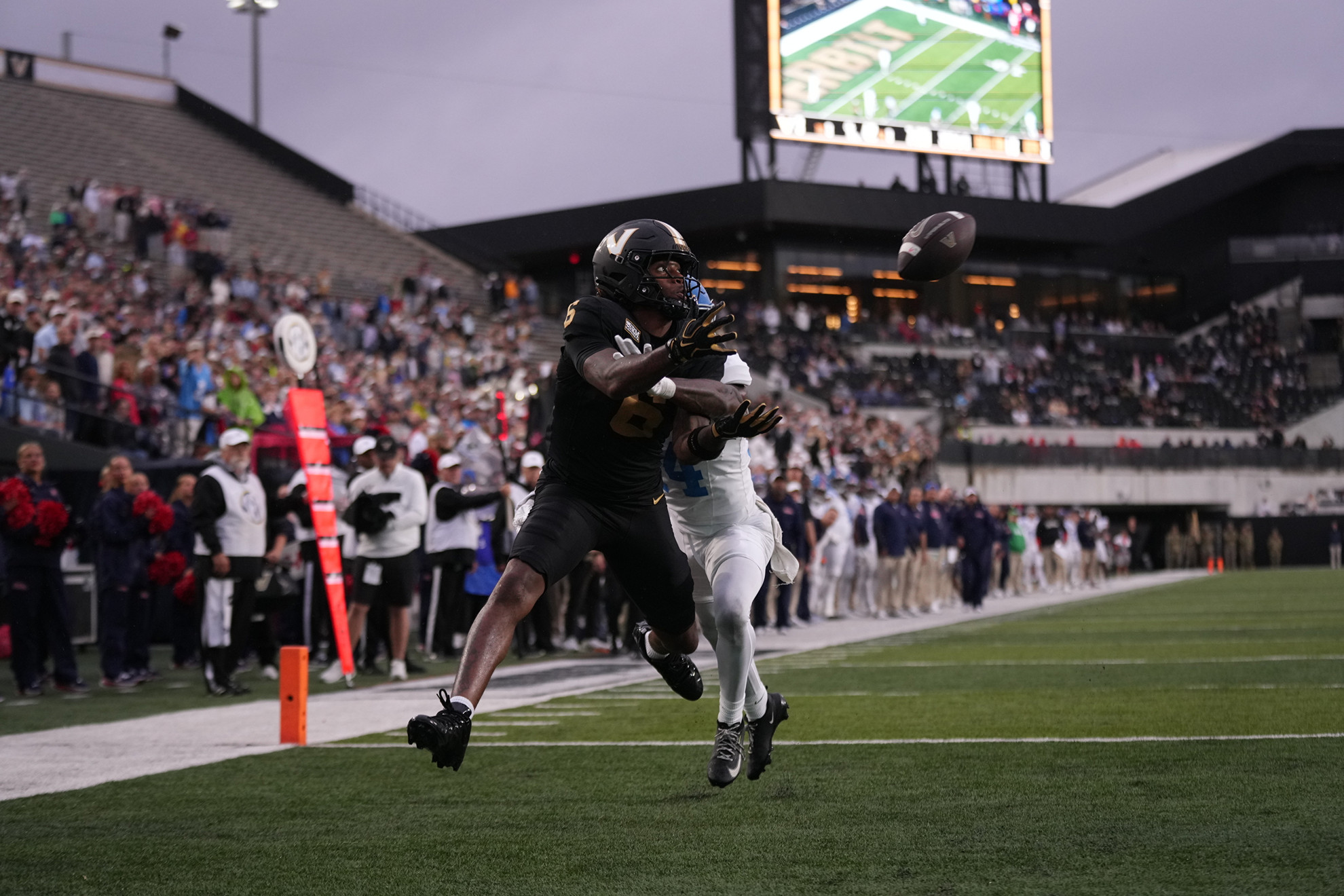
Vanderbilt lost 52–17 at home to Ole Miss on October 10, falling to 3–3 overall and 0–3 in the SEC. Four Commodore turnovers produced 24 Ole Miss points. The Rebels led 42–3 at halftime. Jared Curtis completed 19 of 32 passes for 222 yards, one touchdown, and two interceptions; Vanderbilt finished with 343 total yards.
The Commodores host Arkansas on October 17, with kickoff scheduled for 6 p.m. in Nashville. Their last game contained a more encouraging offensive sequence as well: a 12-play, 75-yard touchdown drive after halftime. That possession does not erase the earlier mistakes, but it offers a concrete contrast to the short paths Vanderbilt supplied the opponent.
Give an offense room to work
Curtis’s passing yardage is less important to the immediate diagnosis than the possessions Vanderbilt lost. An offense trailing by that much has little freedom to choose the pace or demand patience from a defense. Calls made to recover a large deficit can ask the quarterback to accept risk that a closer game would not require. That cycle makes protecting the early possessions particularly valuable.
This is not an argument for playing without ambition. A safe throw that produces no useful yardage can still leave a team in trouble. The better distinction is between calculated pressure on a defense and a play that removes Vanderbilt’s next opportunity entirely. Route spacing, protection checks, and an available outlet should help a quarterback identify that difference before the situation becomes a scramble for a heroic answer.
The useful part of the second half
The 75-yard drive shows what Vanderbilt can accomplish when it retains the football through an extended series. Its value is as a model of possession continuity, not proof that the offense performed equally well against every game situation. A defense with a substantial lead can approach a possession differently. The Commodores must reproduce the steadiness earlier, while the opponent is still contesting a close score.
Against Arkansas, the first-quarter question is therefore whether Vanderbilt can make the visitors earn their field position and points. Avoiding giveaways will not by itself solve every defensive issue. It will let those issues be evaluated without an opponent repeatedly starting with an immediate advantage. Vanderbilt needs Curtis to contribute, but it should not build the entire afternoon around asking its quarterback to rescue a game that the offense has already made unnecessarily difficult.
Sources & reporting
This article adds independent analysis to publicly available reporting. We did not conduct the interviews or report the game firsthand. Report a factual error.